












I began my professional career in 1995 at a blue-chip British manufacturing business called BICC. At that time they had five factories across the North West and employed 35,000 people. The hum of the shop floor, the factory bell, and the chatter of the works’ canteen was the soundtrack to my early working life. At its peak, one BICC factory in Prescot employed 28,000 people. ‘B.I.’ was the town. Today that factory, like all of the other BICC factories, have closed and not one of those manufacturing jobs remain.
The loss of manufacturing jobs has ripped apart towns across the UK. And it is not just the loss of income that has destroyed these communities, it is also the loss of a sense of purpose, identity and pride.
The textiles industry has been particularly hard hit. Over the past 50 years, employment in the sector has dropped from around 1.6 million to just fifty thousand. In some towns, textile jobs accounted for almost 50% of all employment. Today, in the former textile heartlands of Lancashire and Yorkshire, almost 1 in 4 people of working age are not in employment.
The textile regions in which Community Clothing works sit squarely in the list of the most deprived in the country by every ranking. The government’s Indices of Deprivation report makes shocking reading, and the correlation between deprivation and the loss of manufacturing jobs is startlingly clear. The correlation between these textile regions and the worst effects of Covid 19 are equally apparent. Blackburn, Bury, Leeds, Leicester, Preston and Rochdale all made the news as local hotspots. Lancashire, Liverpool, Greater Manchester and South Yorkshire had Tier 3 Lockdowns. All are textile regions, all disproportionately affected by Covid.

Community Clothing is a social enterprise which creates employment and pathways to employment in the UK’s textile manufacturing regions, working with partner factories in six of the UK’s most deprived areas. We work with these partner factories, filling capacity during their significant quiet periods, creating a virtuous circle of rising volumes, rising efficiency and rising employment. To date we have created over 140,000 hours of skilled work.
Community Clothing’s work has never been more important and whilst our capacity has been reduced, we have continued to operate throughout 2020 delivering positive impact in Covid hit areas, creating over 10,000 hours of work.
Our model is simple; the things you buy create well-paid work. Whilst vaccines give us hope of a route to ending the health effects of this pandemic, the lasting legacy of economic hardship will not be so easily erased in those regions worst affected, regions already suffering the most.
So, whilst many of us have faced great personal difficulty this year, we ask that if you can PLEASE support local social enterprises like ours this Christmas and help make life for people in these regions a little better in 2021.
Because in a year when many of us have struggled to find happiness you could find that making other people happy will make you happy too.
Patrick Grant
Community Clothing Founder


I began my professional career in 1995 at a blue-chip British manufacturing business called BICC. At that time they had five factories across the North West and employed 35,000 people. The hum of the shop floor, the factory bell, and the chatter of the works’ canteen was the soundtrack to my early working life. At its peak, one BICC factory in Prescot employed 28,000 people. ‘B.I.’ was the town. Today that factory, like all of the other BICC factories, have closed and not one of those manufacturing jobs remain.
The loss of manufacturing jobs has ripped apart towns across the UK. And it is not just the loss of income that has destroyed these communities, it is also the loss of a sense of purpose, identity and pride.
The textiles industry has been particularly hard hit. Over the past 50 years, employment in the sector has dropped from around 1.6 million to just fifty thousand. In some towns, textile jobs accounted for almost 50% of all employment. Today, in the former textile heartlands of Lancashire and Yorkshire, almost 1 in 4 people of working age are not in employment.
The textile regions in which Community Clothing works sit squarely in the list of the most deprived in the country by every ranking. The government’s Indices of Deprivation report makes shocking reading, and the correlation between deprivation and the loss of manufacturing jobs is startlingly clear. The correlation between these textile regions and the worst effects of Covid 19 are equally apparent. Blackburn, Bury, Leeds, Leicester, Preston and Rochdale all made the news as local hotspots. Lancashire, Liverpool, Greater Manchester and South Yorkshire had Tier 3 Lockdowns. All are textile regions, all disproportionately affected by Covid.
Community Clothing is a social enterprise which creates employment and pathways to employment in the UK’s textile manufacturing regions, working with partner factories in six of the UK’s most deprived areas. We work with these partner factories, filling capacity during their significant quiet periods, creating a virtuous circle of rising volumes, rising efficiency and rising employment. To date we have created over 140,000 hours of skilled work.
Community Clothing’s work has never been more important and whilst our capacity has been reduced, we have continued to operate throughout 2020 delivering positive impact in Covid hit areas, creating over 10,000 hours of work.
Our model is simple; the things you buy create well-paid work. Whilst vaccines give us hope of a route to ending the health effects of this pandemic, the lasting legacy of economic hardship will not be so easily erased in those regions worst affected, regions already suffering the most.
So, whilst many of us have faced great personal difficulty this year, we ask that if you can PLEASE support local social enterprises like ours this Christmas and help make life for people in these regions a little better in 2021.
Because in a year when many of us have struggled to find happiness you could find that making other people happy will make you happy too.
Patrick Grant
Community Clothing Founder


I have long fancied including a classic Guernsey in our collection and so last summer I was delighted to have the chance to visit the Le Tricoteur factory on the island's western coast.
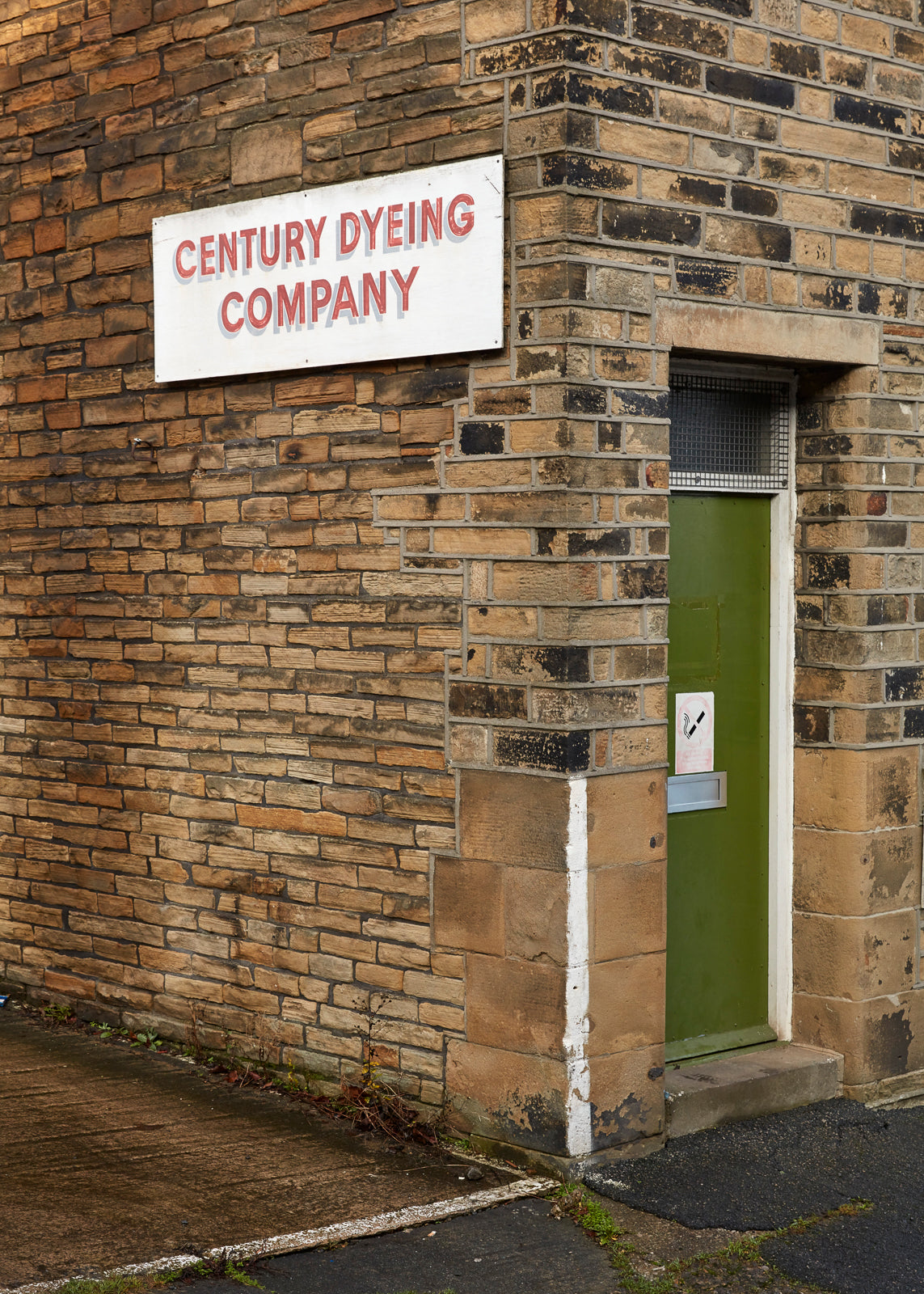

Everything we do is a celebration of the people, the skills and the traditions of the amazing factories we work with, all of them the very best of their kind, all of them deeply embedded in the culture and history of their communities.


Great photographs don’t just show our clothes, they tell our story and connect you with what we do.
Our philosophy around photography is really simple: just keep it honest. Shoot the clothes as they are, don’t alter or pin them, don’t retouch. When our clothes arrive and you put them on we want them to look like the clothes you see in the pictures.